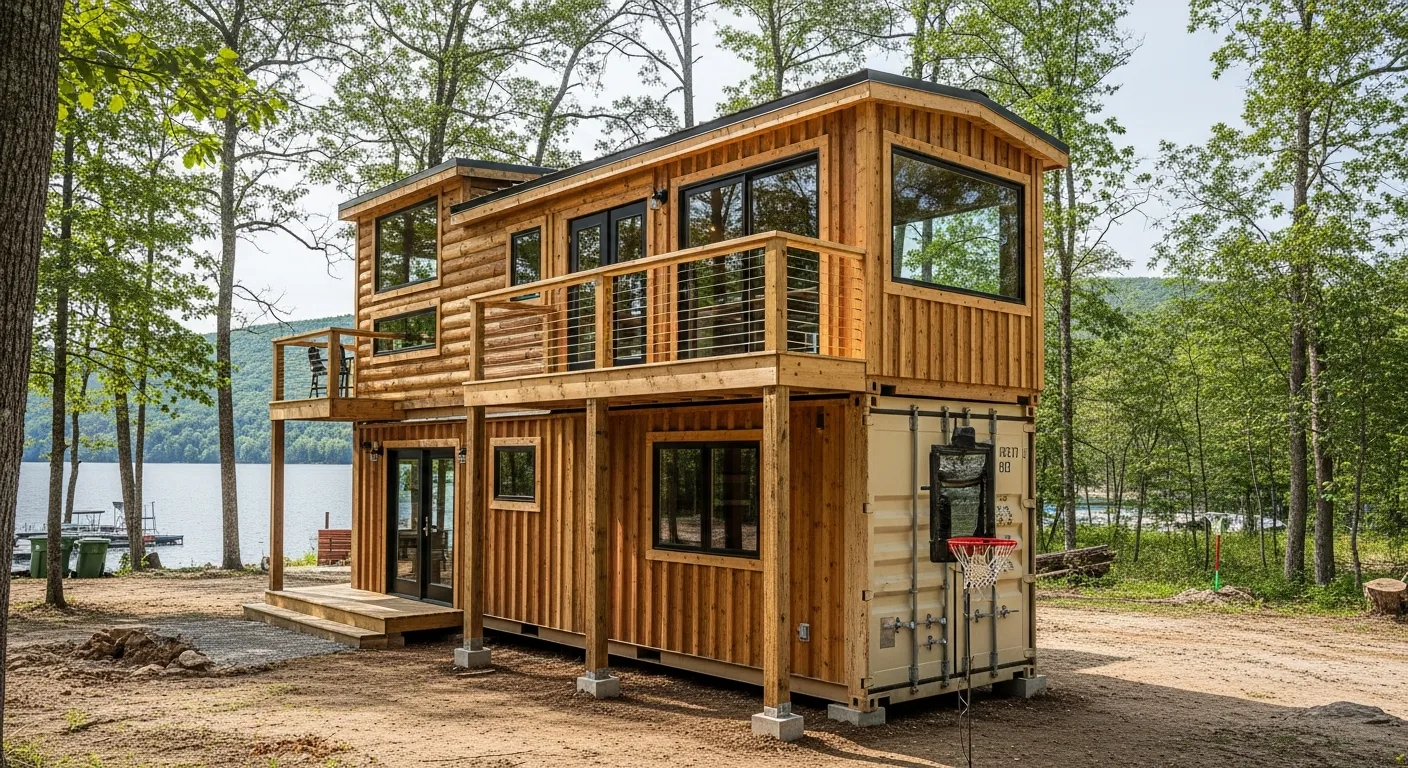
In the world of alternative housing, two story shipping container homes and tiny log cabins are capturing imaginations with their blend of industrial chic and rustic charm. These compact dwellings offer a sustainable, cost-effective solution for those seeking to downsize or embrace minimalist living without sacrificing style or functionality. From urban infill projects to remote retreats, the versatility of container and log structures allows for endless customization, making them a popular choice for eco-conscious homeowners and DIY enthusiasts alike. Whether you’re drawn to the sleek lines of a modern container home or the cozy warmth of a tiny log cabin, this guide will walk you through the essentials of design, construction, and living in these innovative spaces.
Two story shipping container homes are multi-level structures built from repurposed steel containers, offering space-efficient designs ideal for urban or rural settings. Tiny log cabins provide a rustic, energy-efficient alternative, often using prefab kits for quick assembly. Both options support sustainable living with lower costs and customizable layouts.
Why Choose Two Story Shipping Container Homes?
Two story shipping container homes have surged in popularity due to their durability, affordability, and eco-friendly appeal. Made from recycled steel shipping containers, these homes are inherently strong and resistant to harsh weather, making them suitable for various climates. By stacking containers vertically, you can maximize living space on a small footprint, perfect for tight urban lots or scenic rural properties. The modular nature of containers allows for easy expansion and customization, with options to add features like balconies, skylights, and green roofs. For those interested in modern container home styles and costs, exploring different designs can help you visualize the possibilities.
- Durable steel construction withstands extreme conditions
- Cost-effective compared to traditional building methods
- Eco-friendly by repurposing industrial materials
- Modular design for easy customization and expansion
- Ideal for small lots with vertical space utilization
Tiny Log Cabins: Rustic Charm Meets Modern Efficiency
Tiny log cabins offer a timeless aesthetic with the added benefits of energy efficiency and quick construction. These homes, often built from sustainably sourced timber, provide excellent insulation, keeping you warm in winter and cool in summer. Prefab kits, available from companies in areas like Kansas City, simplify the building process, allowing for faster assembly and reduced labor costs. Tiny log homes are perfect for those seeking a retreat in nature, with designs that blend seamlessly into wooded or mountainous landscapes. Their compact size encourages a minimalist lifestyle, reducing clutter and environmental impact. For more on rustic designs, check out our guide to ranch and farmhouse styles.
- Select a prefab kit or custom design based on your needs
- Prepare the foundation, such as a concrete slab or piers
- Assemble the log walls using interlocking techniques
- Install roofing, windows, and doors for weatherproofing
- Add interior finishes like insulation and flooring
Design Considerations for Two Story Container Homes
When planning a two story shipping container home, key design elements include layout, insulation, and structural integrity. Start by determining the number and size of containers—common options are 20-foot or 40-foot units. Stack them securely with welded or bolted connections, and consider adding staircases or ladders for access between floors. Insulation is crucial to prevent condensation and maintain temperature; spray foam or panel systems work well. For windows and doors, cut openings carefully to preserve structural strength, and incorporate features like sliding glass doors to enhance natural light. Integrating sustainable systems, such as solar panels or rainwater harvesting, can boost off-grid capabilities. To ensure your home meets safety standards, refer to our home electrical guide for wiring tips.
| Feature | Two Story Container Home | Tiny Log Cabin |
|---|---|---|
| Material | Steel shipping containers | Timber logs |
| Insulation | Spray foam or panels | Natural wood with added insulation |
| Construction Time | 3-6 months | 1-3 months (prefab kits) |
| Cost Range | $50,000 – $150,000 | $30,000 – $100,000 |
| Best For | Urban settings, modern aesthetics | Rural retreats, rustic charm |
Prefab Homes in Kansas City: Local Options and Benefits
Prefab homes, including container and log cabin designs, are gaining traction in Kansas City due to their efficiency and affordability. Local manufacturers offer customized kits that comply with regional building codes, ensuring a smoother permitting process. Prefab construction reduces waste and construction time, as components are fabricated off-site and assembled on location. This approach is ideal for homeowners looking to build quickly without sacrificing quality. In Kansas City, you can find providers specializing in tiny homes, container units, and log cabins, with options for both primary residences and vacation properties. For those considering investment properties, explore Key Largo vacation home rentals for inspiration.
- Faster build times with off-site fabrication
- Lower labor costs and reduced material waste
- Customizable designs to fit local aesthetics
- Compliance with Kansas City building regulations
- Support for sustainable and energy-efficient features
Cost Breakdown and Budgeting Tips
Building a two story shipping container home or tiny log cabin involves several cost factors, from materials to labor. For container homes, expect to spend $50,000 to $150,000, depending on size, finishes, and site preparation. Log cabins typically range from $30,000 to $100,000, with prefab kits at the lower end. Key expenses include foundation work, insulation, plumbing, and electrical systems. To save money, consider DIY aspects like interior painting or landscaping, but hire professionals for structural and electrical tasks to ensure safety. Budget for permits, which vary by location, and set aside a contingency fund for unexpected issues. For more on managing home projects, see our home valuation basics to understand appraisals.
- Estimate total budget based on design complexity
- Source materials locally to reduce shipping costs
- Prioritize essential features like insulation and roofing
- Compare contractor quotes for labor-intensive tasks
- Plan for ongoing maintenance and utility costs
Sustainable Living and Environmental Impact
Both two story shipping container homes and tiny log cabins promote sustainable living by minimizing resource use and carbon footprints. Container homes repurpose steel that might otherwise go to waste, while log cabins often use timber from managed forests. Their small size reduces energy consumption for heating and cooling, especially when paired with efficient systems like solar panels or geothermal heat. To enhance sustainability, incorporate green roofs, rainwater collection, and composting toilets. These homes also encourage a minimalist lifestyle, reducing waste and promoting environmental awareness. For tips on eco-friendly home systems, our home water treatment guide covers filtration options.
- Reduced material waste through recycling and reuse
- Lower energy needs due to compact designs
- Potential for off-grid living with renewable energy
- Support for local ecosystems with mindful siting
- Encouragement of minimalist and low-impact lifestyles
FAQs About Two Story Shipping Container Homes and Tiny Log Cabins
What are the main advantages of two story shipping container homes?
Two story shipping container homes offer durability, cost savings, and eco-friendliness. Their steel construction is resilient, and stacking containers maximizes space efficiently, making them ideal for small lots.
How much does a tiny log cabin cost to build?
Tiny log cabins typically cost between $30,000 and $100,000, with prefab kits being more affordable. Costs vary based on size, materials, and location, so budgeting carefully is essential.
Are prefab homes in Kansas City a good investment?
Yes, prefab homes in Kansas City can be a smart investment due to lower construction costs, faster build times, and growing demand for sustainable housing options in the area.
Can I build a two story container home myself?
While DIY is possible for some aspects, like interior finishes, professional help is recommended for structural work, welding, and electrical systems to ensure safety and code compliance.
What insulation is best for container homes?
Spray foam insulation is popular for container homes because it provides a tight seal against moisture and temperature fluctuations, though panel systems are also effective.
How long does it take to build a tiny log cabin?
With a prefab kit, a tiny log cabin can be assembled in 1-3 months, while custom builds may take longer, depending on design complexity and site conditions.
Are log cabins energy efficient?
Yes, log cabins are naturally energy efficient due to the insulating properties of wood, which helps maintain stable indoor temperatures, reducing heating and cooling costs.
What permits are needed for these homes?
Permits vary by location but generally include building, electrical, and plumbing approvals. Check with local authorities in Kansas City or your area for specific requirements.