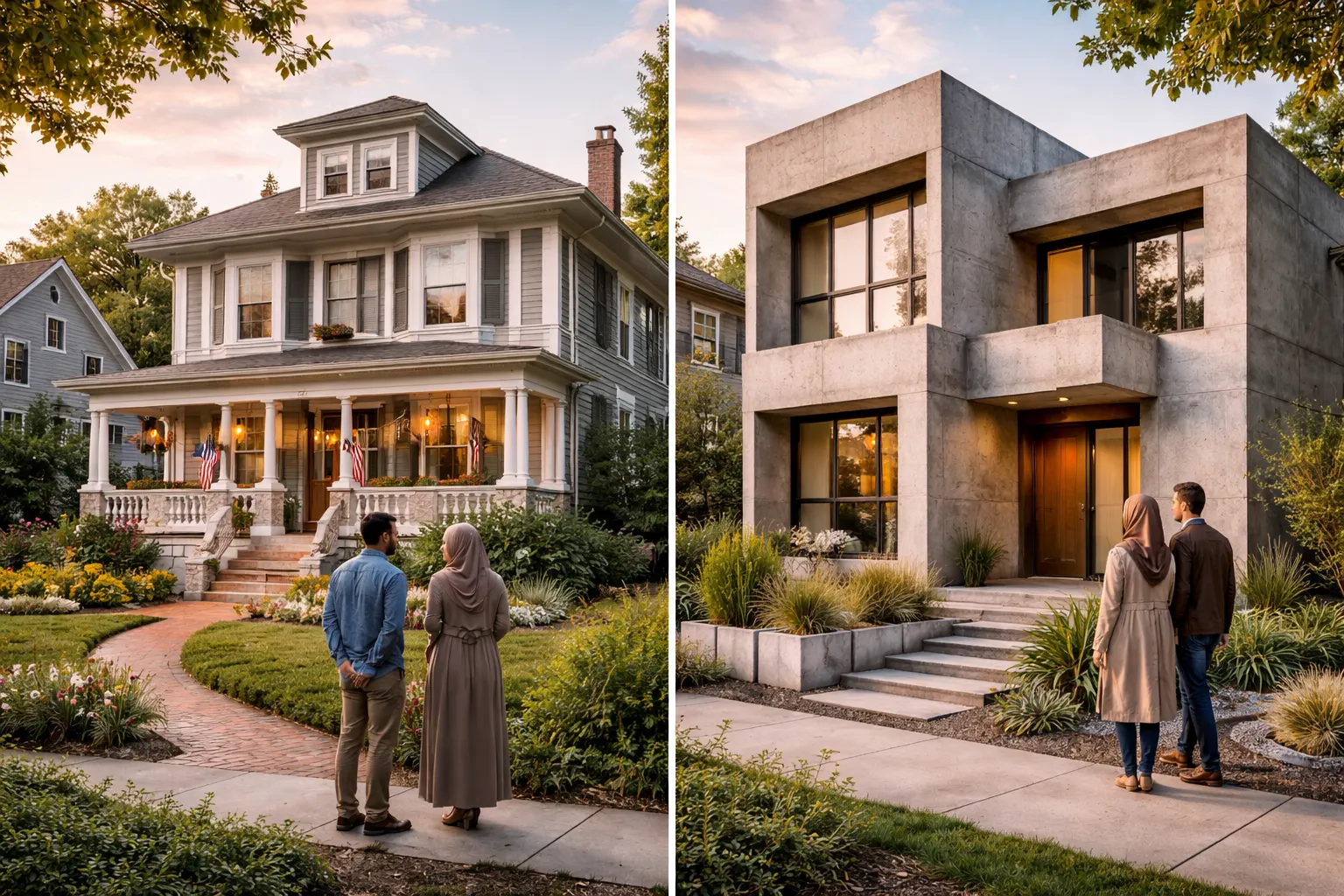
Historical architecture tells the story of societal shifts, technological advancements, and cultural preferences, with styles like American Foursquare, Folk Victorian, and Brutalist homes offering distinct windows into different eras. From the practical simplicity of the early 20th century to the ornate details of the late 1800s and the bold concrete forms of the mid-1900s, these architectural movements reflect diverse philosophies in design and living. In this guide, we delve into the origins, characteristics, and modern relevance of these iconic styles, helping you appreciate the rich tapestry of different types of home styles that shape our built environment. Whether you’re a history buff, a potential homebuyer, or simply curious about architectural evolution, understanding these styles enhances your appreciation for the homes around us.
American Foursquare homes are practical, boxy houses from the early 1900s with simple designs and efficient layouts. Folk Victorian homes feature ornate details and asymmetrical shapes from the late 1800s, while Brutalist architecture homes use raw concrete and bold geometric forms from the mid-20th century, each representing distinct historical and cultural movements.
What Are American Foursquare Homes?
American Foursquare homes, also known as Prairie Boxes, emerged in the United States during the late 19th and early 20th centuries, peaking in popularity from about 1890 to 1930. This style was a reaction against the elaborate Victorian designs, emphasizing practicality, affordability, and efficient use of space. Often built as part of the mail-order kit home trend, these houses were accessible to the growing middle class, making them a staple in suburban neighborhoods across the country. Their straightforward construction and functional layouts made them ideal for families seeking comfortable, no-fuss living spaces during a time of rapid urbanization.
- Square or Rectangular Shape: Typically two-and-a-half stories with a simple, boxy footprint.
- Hipped Roof: A low-pitched roof that slopes on all sides, often with a central dormer.
- Front Porch: A wide, full-width porch that extends across the front facade.
- Symmetrical Windows: Double-hung sash windows arranged in a balanced pattern.
- Efficient Interior Layout: Four rooms per floor, centered around a staircase, maximizing space.
Compared to other styles, American Foursquare homes prioritize utility over ornamentation, though some may include Craftsman-inspired details like exposed rafters or built-in cabinetry. This focus on simplicity aligns with broader trends in modern housing options, such as modular and prefab designs, which also emphasize cost-effectiveness and streamlined construction. If you’re interested in efficient living spaces, exploring efficient 1000-1200 sq ft home plans can provide insights into smart design concepts that echo the Foursquare’s practical ethos.
Folk Victorian Homes: Ornate Charm from the Past
Folk Victorian homes represent a more accessible version of the high-style Victorian architecture, popular from around 1870 to 1910. These houses were often built by local craftsmen using pattern books, making ornate details available to a wider audience beyond the wealthy. Characterized by their decorative trim, asymmetrical facades, and varied rooflines, Folk Victorian homes blend simplicity with elegance, offering a glimpse into the romanticized ideals of the era. Unlike the rigid symmetry of Foursquare designs, these homes embrace whimsy and individuality, with elements like gingerbread trim, spindlework, and decorative gables.
- Asymmetrical Design: Irregular shapes with projecting bays and varied roof heights.
- Decorative Details: Ornate woodwork, such as brackets, spindles, and fretwork.
- Wraparound Porches: Often featuring turned posts and intricate railings.
- Steep Pitched Roofs: With gables, dormers, and sometimes towers or turrets.
- Mixed Materials: Use of wood siding, shingles, and sometimes brick or stone accents.
The intricate exteriors of Folk Victorian homes can inspire modern renovations, such as adding mobile home exteriors with enhanced skirting and siding for a historic touch. For a deeper dive into ornate architectural styles, check out our guide on French Colonial homes & more, which explores cultural and historic designs that share similar decorative elements.
Brutalist Architecture Homes: Bold and Controversial
Brutalist architecture homes, part of the broader Brutalist movement, gained prominence from the 1950s to the 1970s, particularly in institutional and residential buildings. Derived from the French term “béton brut” (raw concrete), this style emphasizes honesty in materials, geometric forms, and a monolithic appearance. Often polarizing due to its stark, imposing aesthetic, Brutalism reflects post-war ideals of functionality, durability, and social utopianism. In residential contexts, these homes are rare but notable for their sculptural quality and emphasis on structural expression.
- Raw Concrete Construction: Exposed concrete surfaces with textured finishes from formwork.
- Geometric Shapes: Blocky, angular forms with heavy, fortress-like appearances.
- Minimal Ornamentation: Focus on materiality and structure over decorative details.
- Functional Layouts: Often designed with open plans and integrated outdoor spaces.
- Industrial Elements: Use of steel, glass, and other modern materials in combination.
While Brutalist homes are less common today, their influence can be seen in contemporary designs that prioritize raw materials and bold forms. For those interested in structural integrity and home maintenance, learning about fixing foundation cracks is crucial, as concrete structures require careful upkeep. Additionally, integrating smart home setup devices can modernize these historic styles with today’s technology.
Comparing Historical Home Styles
Understanding the differences between American Foursquare, Folk Victorian, and Brutalist architecture homes helps appreciate their unique contributions to residential design. The table below summarizes key aspects:
| Style | Time Period | Key Characteristics | Common Materials | Modern Relevance |
|---|---|---|---|---|
| American Foursquare | 1890-1930 | Boxy shape, hipped roof, symmetrical windows | Wood, brick | Popular for renovations and efficient living |
| Folk Victorian | 1870-1910 | Asymmetrical design, ornate trim, wraparound porches | Wood, shingles | Inspires decorative exterior updates |
| Brutalist | 1950-1970 | Raw concrete, geometric forms, minimal ornament | Concrete, steel | Influences modern minimalist and industrial designs |
Each style offers lessons for today’s homeowners. For example, the efficiency of Foursquare layouts can inform 2 bedroom tiny home designs, while the durability of Brutalist materials relates to whole home upgrades like repiping and dehumidification. Exploring modern housing options can also show how historical principles evolve in contemporary construction.
Why These Styles Matter Today
Historical architecture isn’t just about aesthetics; it shapes how we live, build, and preserve our communities. American Foursquare homes teach us about practicality and affordability, relevant in an era of rising housing costs. Folk Victorian homes remind us of the value of craftsmanship and individuality, inspiring custom details in modern renovations. Brutalist architecture homes challenge us to appreciate raw materials and bold statements, influencing sustainable design and adaptive reuse. By studying these different types of home styles, we gain insights into cultural history and innovative solutions for today’s housing challenges.
- Preservation Efforts: Many communities have historic districts protecting these styles, boosting property values and cultural heritage.
- Renovation Potential: Older homes often offer solid construction and character, appealing to DIY enthusiasts and renovators.
- Sustainability: Reusing existing structures reduces waste and energy compared to new construction.
- Investment Value: Well-maintained historical homes can appreciate in value, especially with unique features.
- Educational Resource: They serve as tangible links to past architectural movements and societal trends.
For homeowners, understanding these styles can guide decisions on how solar panels increase home value through eco-friendly upgrades that complement historical integrity. Additionally, ensuring home emergency preparedness is vital for maintaining older structures against risks like fires or storms.
Frequently Asked Questions
What makes American Foursquare homes different from other historical styles?
American Foursquare homes stand out for their simple, boxy design and efficient use of space, contrasting with the ornate details of Victorian styles or the raw concrete of Brutalism. They were built for practicality and affordability, often featuring symmetrical layouts and minimal decoration.
Are Folk Victorian homes expensive to maintain?
Yes, Folk Victorian homes can be costly to maintain due to their intricate woodwork and older construction materials. Regular upkeep, such as repainting trim and repairing porches, is essential to preserve their charm and structural integrity.
Why is Brutalist architecture so controversial?
Brutalist architecture is controversial because of its stark, imposing appearance and use of raw concrete, which some find unattractive or cold. However, others appreciate its honesty in materials and bold geometric forms as a reflection of modernist ideals.
Can I mix historical styles in a renovation?
Yes, mixing historical styles in a renovation is possible but requires careful planning to maintain cohesion. For example, adding Victorian details to a Foursquare home can enhance character, but it’s best to consult with an architect to ensure compatibility.
How do I identify the architectural style of my home?
To identify your home’s architectural style, look for key features like roof shape, window patterns, and decorative elements. Comparing these to known styles, such as American Foursquare or Folk Victorian, can help. Online resources or local historical societies may also provide guidance.
Are there modern homes inspired by these historical styles?
Absolutely! Modern homes often draw inspiration from historical styles, such as neo-Victorian designs with updated materials or contemporary interpretations of Brutalism using concrete and glass. These blends offer timeless aesthetics with modern functionality.
What should I consider before buying a historical home?
Before buying a historical home, consider factors like maintenance costs, potential renovation restrictions in historic districts, and the condition of foundational elements. It’s wise to get a thorough inspection and research local preservation guidelines.
How can I preserve the historical integrity of my home?
To preserve historical integrity, use period-appropriate materials and techniques during repairs, avoid drastic alterations that erase original features, and document any changes. Engaging with preservation experts can ensure authenticity while meeting modern needs.
Frequently Asked Questions
What makes American Foursquare homes different from other historical styles?
American Foursquare homes stand out for their simple, boxy design and efficient use of space, contrasting with the ornate details of Victorian styles or the raw concrete of Brutalism. They were built for practicality and affordability, often featuring symmetrical layouts and minimal decoration.
Are Folk Victorian homes expensive to maintain?
Yes, Folk Victorian homes can be costly to maintain due to their intricate woodwork and older construction materials. Regular upkeep, such as repainting trim and repairing porches, is essential to preserve their charm and structural integrity.
Why is Brutalist architecture so controversial?
Brutalist architecture is controversial because of its stark, imposing appearance and use of raw concrete, which some find unattractive or cold. However, others appreciate its honesty in materials and bold geometric forms as a reflection of modernist ideals.
Can I mix historical styles in a renovation?
Yes, mixing historical styles in a renovation is possible but requires careful planning to maintain cohesion. For example, adding Victorian details to a Foursquare home can enhance character, but it’s best to consult with an architect to ensure compatibility.
How do I identify the architectural style of my home?
To identify your home’s architectural style, look for key features like roof shape, window patterns, and decorative elements. Comparing these to known styles, such as American Foursquare or Folk Victorian, can help. Online resources or local historical societies may also provide guidance.
Are there modern homes inspired by these historical styles?
Absolutely! Modern homes often draw inspiration from historical styles, such as neo-Victorian designs with updated materials or contemporary interpretations of Brutalism using concrete and glass. These blends offer timeless aesthetics with modern functionality.
What should I consider before buying a historical home?
Before buying a historical home, consider factors like maintenance costs, potential renovation restrictions in historic districts, and the condition of foundational elements. It’s wise to get a thorough inspection and research local preservation guidelines.
How can I preserve the historical integrity of my home?
To preserve historical integrity, use period-appropriate materials and techniques during repairs, avoid drastic alterations that erase original features, and document any changes. Engaging with preservation experts can ensure authenticity while meeting modern needs.