Leveling a mobile home is a critical maintenance task that ensures structural integrity, prevents damage, and enhances comfort. Over time, settling soil, weather changes, or improper installation can cause your home to become uneven, leading to issues like sticking doors, cracked walls, and plumbing problems. Whether you’re a homeowner looking to save money with DIY methods or planning to hire professionals, understanding the costs, materials like dirt pads and concrete footers, and step-by-step processes is essential. This guide covers everything from budget-friendly options to professional services, helping you make informed decisions for a stable and safe living environment. For broader insights into mobile home upkeep, explore our master maintenance checklists.
Leveling a mobile home typically costs $500 to $5,000, depending on factors like size, soil conditions, and method. DIY dirt pads can cost as low as $200, while professional concrete footers may reach $3,000+. Regular checks and prompt action prevent costly repairs.
How Much Does It Cost to Level a Mobile Home?
The cost to level a mobile home varies widely based on several factors, making it crucial to assess your specific situation. On average, homeowners spend between $500 and $5,000, with most projects falling in the $1,000 to $3,000 range. Key cost drivers include the home’s size, extent of unevenness, soil type, and whether you opt for DIY or professional services. For instance, a single-wide trailer might cost less than $1,000, while a double-wide with severe settling could exceed $4,000. Additional expenses may arise if repairs to the subfloor or foundation are needed, which can add $500 to $2,000. To avoid surprises, get multiple quotes and consider long-term benefits like improved safety and property value. If you’re dealing with structural issues, our mobile home structural repair guide offers detailed solutions.
- Size of the home: Single-wide ($500-$1,500) vs. double-wide ($1,500-$5,000)
- Soil conditions: Rocky or clay soils increase costs due to extra labor
- Method used: Dirt pads are cheaper, concrete footers are more durable but pricier
- Professional fees: Labor costs range from $50 to $150 per hour
- Permits and inspections: May add $100 to $300 depending on local regulations
How to Level a Trailer Home: Step-by-Step DIY Methods
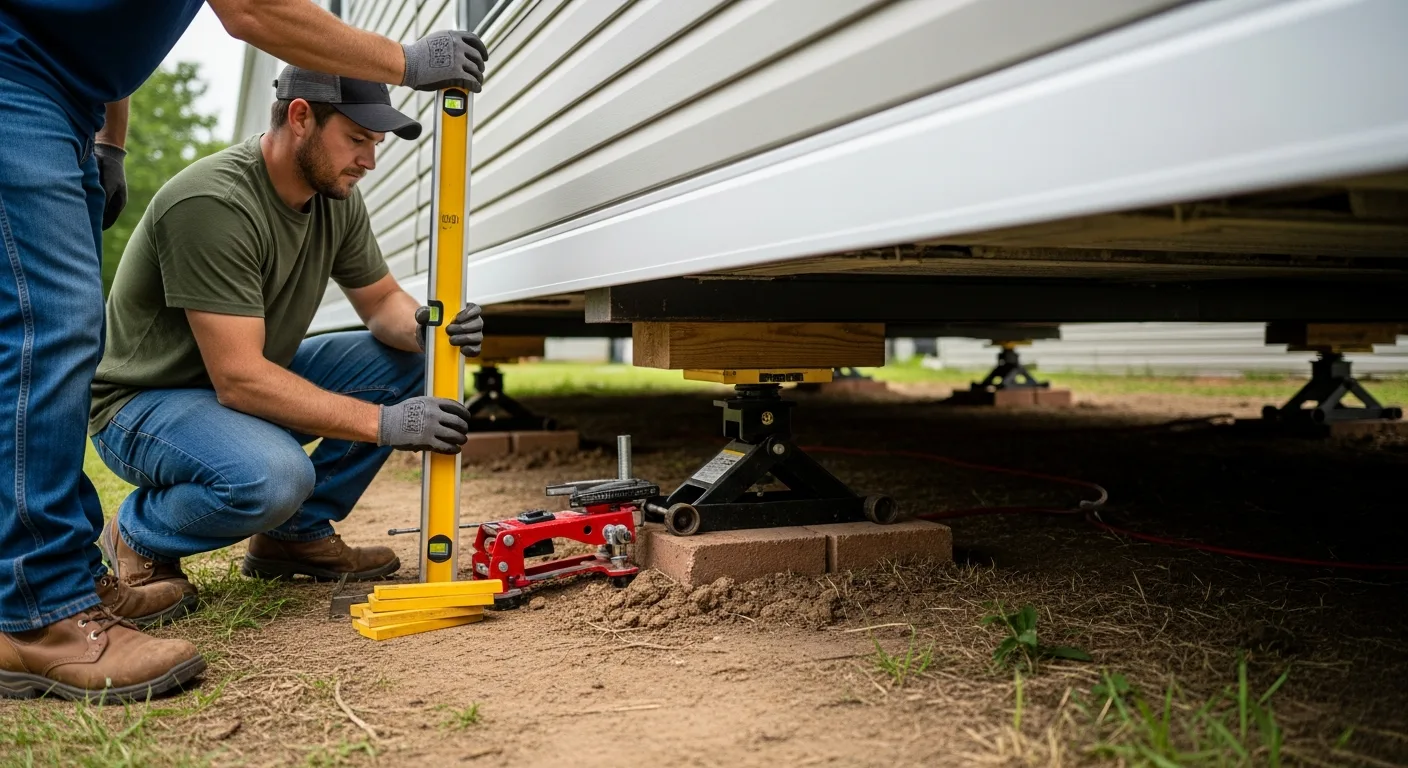
Leveling a trailer home yourself can save money, but it requires careful planning and the right tools. Start by assessing the unevenness using a level tool—check doors, windows, and floors for signs of misalignment. Common DIY methods include using jacks, shims, or adjusting existing piers. For minor adjustments, you might spend a weekend and $200-$500 on materials. However, safety is paramount: always use proper supports and avoid over-jacking, which can cause damage. If you’re new to this, consider consulting a professional for an inspection first. For more on mobile home setup, see our installation guide.
- Inspect the home: Look for cracks, sticking doors, or sloping floors
- Gather tools: Level, jacks, shims, measuring tape, and safety gear
- Choose a method: Use dirt pads for temporary fixes or concrete for permanence
- Lift gradually: Jack up low areas slowly, checking with a level frequently
- Secure with supports: Install piers or blocks and test stability
Dirt Pad for Mobile Home: Pros, Cons, and Installation
A dirt pad, or gravel pad, is a cost-effective foundation option for mobile homes, often used in DIY leveling projects. It involves compacting soil and gravel to create a stable base, typically costing $200 to $1,000 depending on size and materials. Pros include affordability, ease of installation, and good drainage, but cons involve susceptibility to erosion and settling over time, requiring more frequent maintenance. To install a dirt pad, clear the area, add a layer of gravel, compact it thoroughly, and ensure proper grading for water runoff. This method is best for temporary setups or low-budget solutions, but for long-term stability, consider combining it with other supports. For exterior protection tips, check our home wrap installation guide.
- Pros: Low cost, DIY-friendly, improves drainage, quick to install
- Cons: Prone to settling, less durable, may need regular re-leveling
- Materials needed: Gravel, compacting tool, level, and landscaping fabric
- Installation time: 1-3 days for a standard pad
- Maintenance: Inspect annually and add gravel as needed
Concrete Footers for Mobile Home: Durability and Costs
Concrete footers are a permanent solution for leveling mobile homes, offering superior stability and longevity. These poured concrete bases support the home’s piers, reducing settling and minimizing future leveling needs. Costs range from $1,000 to $5,000 or more, depending on the number of footers and local labor rates. While more expensive upfront, they can save money in the long run by preventing recurrent issues. Installation involves digging holes, setting forms, pouring concrete, and allowing it to cure—a job best left to professionals due to precision requirements. For those considering other foundation options, our mobile home foundations guide provides a comprehensive overview.
| Feature | Dirt Pad | Concrete Footers |
|---|---|---|
| Cost | $200-$1,000 | $1,000-$5,000+ |
| Durability | Low (5-10 years) | High (20+ years) |
| Installation | DIY-friendly | Professional recommended |
| Maintenance | Frequent checks needed | Minimal after installation |
| Best For | Temporary or budget setups | Permanent, high-stability needs |
FAQs: People Also Ask About Mobile Home Leveling
How often should I level my mobile home?
Inspect your mobile home for leveling at least once a year, especially after extreme weather or if you notice signs like sticking doors. Most homes need re-leveling every 5-10 years, but this varies with soil conditions and foundation type.
Can I level a mobile home myself, or should I hire a pro?
DIY leveling is possible for minor adjustments using jacks and shims, but for significant unevenness or concrete footers, hiring a professional is safer and ensures compliance with local codes. Pros have the expertise to avoid structural damage.
What are the signs my mobile home needs leveling?
Common signs include doors or windows that stick, cracks in walls or ceilings, sloping floors, and plumbing issues like leaks. Early detection prevents costly repairs, so regular checks are key.
How long does it take to level a mobile home?
A simple DIY project might take a weekend, while professional leveling with concrete footers can take 3-7 days, including curing time. Factors like weather and home size affect the timeline.
Does leveling a mobile home increase its value?
Yes, proper leveling improves structural integrity and safety, which can boost property value. It also enhances curb appeal and reduces the risk of future damage, making the home more attractive to buyers.
What’s the difference between leveling and anchoring a mobile home?
Leveling involves adjusting the foundation to keep the home even, while anchoring secures it to the ground to prevent movement from wind or storms. Both are important for safety; learn more in our anchoring and skirting guide.
Can I use a dirt pad in all climates?
Dirt pads work best in dry, stable climates with good drainage. In wet or freezing areas, they may erode or heave, leading to frequent re-leveling. Consider climate-specific foundations for better results.
Are there financing options for mobile home leveling?
Yes, options include personal loans, home improvement loans, or manufacturer warranties. Some states offer grants for low-income homeowners; check local programs for assistance.