Your home’s HVAC system is the unsung hero of comfort, quietly managing temperature and air quality year-round. Whether you’re battling summer heat with an air conditioner or staying cozy with a furnace or boiler, understanding how these systems work can save you money, prevent breakdowns, and ensure efficient operation. In this guide, we’ll break down the essential components, from the parts of a home air conditioner to specialized equipment like oil boilers for home heating and mobile home furnace doors. With practical insights and maintenance tips, you’ll be equipped to handle common issues and make informed decisions about your home’s climate control.
A home air conditioner consists of key parts like the compressor, condenser, evaporator coil, and refrigerant lines, working together to cool your home. For heating, oil boilers use fuel oil to heat water or steam, while mobile home furnaces often have specific doors for LP (liquid propane) systems, requiring proper installation and safety checks. Regular maintenance of these components ensures efficiency and longevity.
Parts of a Home Air Conditioner: A Detailed Breakdown
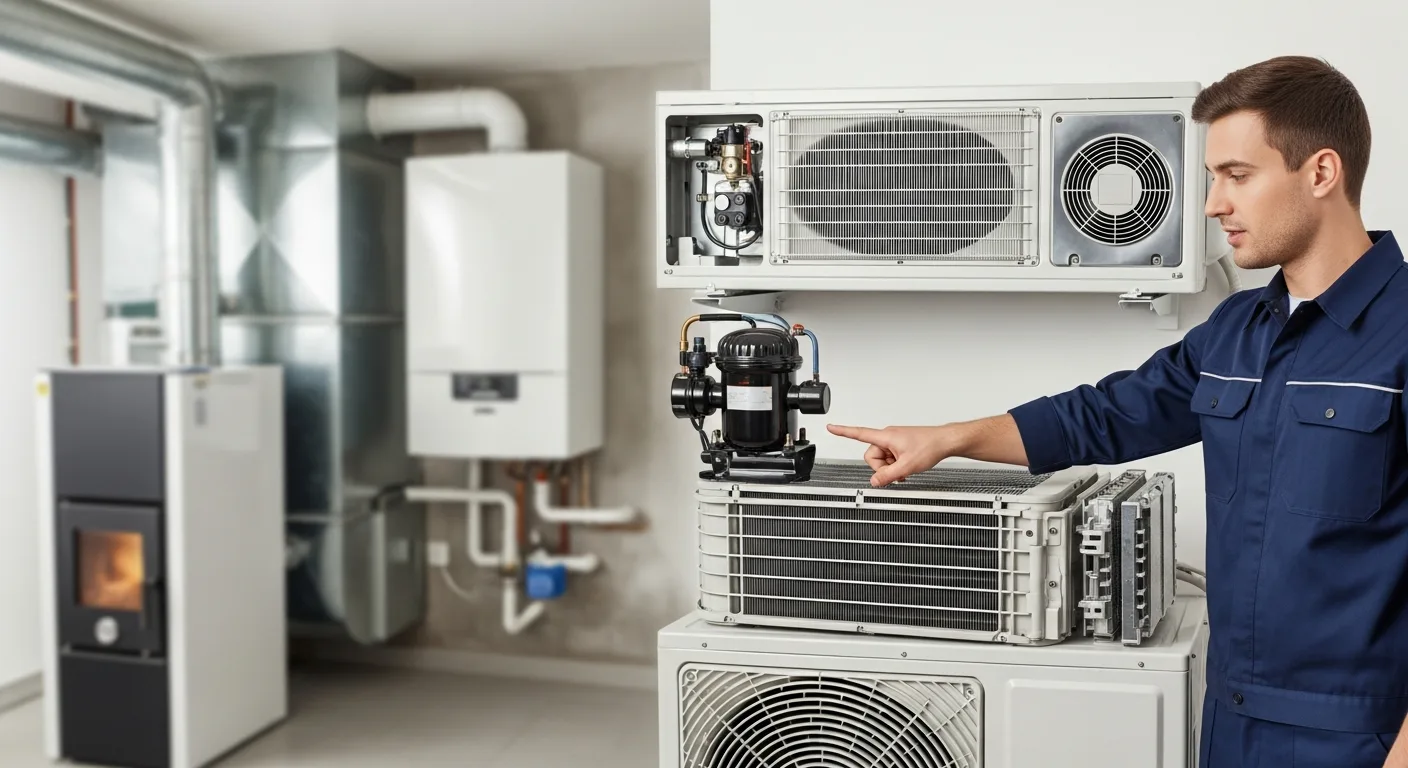
Understanding the parts of a home air conditioner is crucial for troubleshooting and maintenance. These components work in a cycle to remove heat from your indoor air and release it outside. Here are the main elements:
- Compressor: Located in the outdoor unit, it pressurizes refrigerant to move heat.
- Condenser Coil: Releases heat from the refrigerant to the outside air.
- Evaporator Coil: Inside the indoor unit, it absorbs heat from indoor air.
- Refrigerant Lines: Copper tubes that carry refrigerant between coils.
- Air Handler/Fan: Circulates air over the coils to distribute cool air.
- Thermostat: Controls the system based on temperature settings.
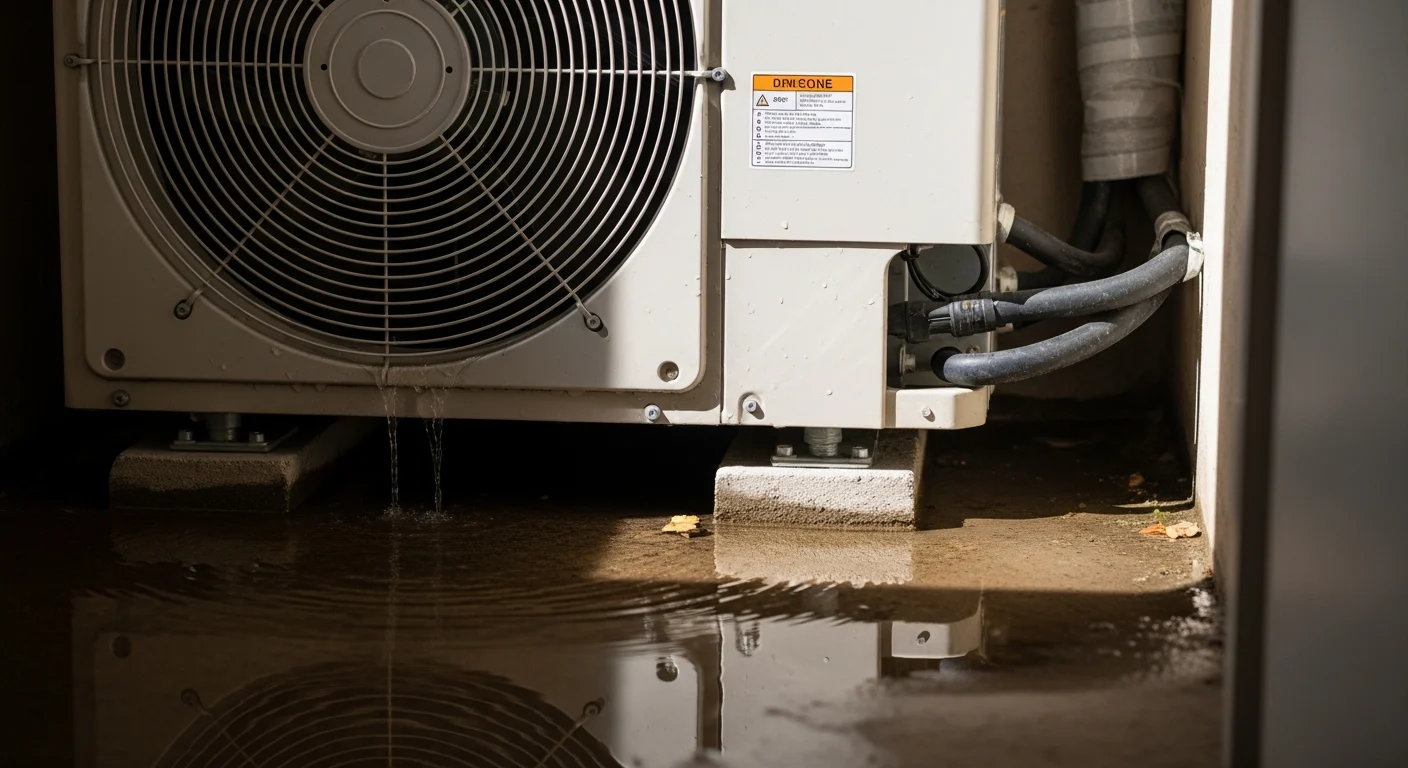
- Drain Pan and Line: Removes condensation to prevent leaks.
Regularly cleaning coils and checking refrigerant levels can prevent issues like reduced cooling or system failure. For more on troubleshooting AC problems, see our guide on home AC leaking water and fan issues.
Oil Boilers for Home Heating: How They Work and Maintenance Tips
Oil boilers are a reliable option for home heating, especially in areas without natural gas. They burn fuel oil to heat water or steam, which is then distributed through radiators or underfloor systems. Key components include:
- Burner: Ignites the oil to produce heat.
- Heat Exchanger: Transfers heat from combustion to water.
- Pump: Circulates heated water through the system.
- Tank: Stores fuel oil, typically located outdoors or in a basement.
- Controls and Thermostat: Regulate temperature and safety features.
Maintenance is vital for efficiency and safety. Schedule annual inspections to clean the burner and check for leaks. Consider upgrading to a high-efficiency model to reduce fuel consumption. For broader HVAC care, explore our mobile home HVAC maintenance guide.
Mobile Home Furnace Doors and LP Systems: Installation and Safety
Mobile homes often use specialized furnaces with unique doors designed for LP (liquid propane) systems. These doors provide access for maintenance and ensure proper ventilation. Here’s what you need to know:
- Mobile Home Furnace Door: Typically made of metal, it seals the combustion chamber and must be securely fastened to prevent carbon monoxide leaks.
- LP Furnace Components: Include a gas valve, burner, and pilot light or electronic ignition.
- Venting Requirements: Proper venting is critical to expel combustion gases safely.
When installing or replacing a mobile home furnace door, ensure it matches the manufacturer’s specifications. Always turn off the gas supply and consult a professional if unsure. For related structural concerns, refer to our article on mobile home structural repair.
Comparing HVAC Systems: AC vs. Boilers vs. Furnaces
Choosing the right HVAC system depends on your home’s needs, climate, and fuel availability. Here’s a comparison table to help you decide:
| System Type | Primary Use | Fuel Source | Pros | Cons |
|---|---|---|---|---|
| Air Conditioner | Cooling | Electricity | Efficient cooling, widely available | High energy use in peak seasons |
| Oil Boiler | Heating | Fuel Oil | Reliable, good for cold climates | Requires fuel storage, higher cost |
| LP Furnace | Heating | Liquid Propane | Portable, suitable for mobile homes | Needs regular tank refills |
Consider factors like installation costs, maintenance needs, and local fuel prices. For more on home additions that might affect HVAC planning, check out our home addition estimator guide.
Maintenance Checklist for Home HVAC Systems
Regular upkeep extends the life of your HVAC equipment and improves efficiency. Follow this checklist seasonally:
- Inspect and Clean Filters: Replace or clean air filters every 1-3 months to ensure airflow.
- Check Refrigerant Levels: For ACs, low refrigerant can reduce cooling; have a professional top up if needed.
- Clean Coils and Ducts: Remove debris from condenser and evaporator coils; consider duct cleaning every few years.
- Test Thermostat and Controls: Ensure accurate temperature readings and proper system cycling.
- Inspect Vents and Flues: For furnaces and boilers, check for blockages or leaks to prevent safety hazards.
- Schedule Professional Tune-ups: Annual inspections by a technician can catch issues early.
For a comprehensive approach, integrate this into your master home maintenance checklist.
Frequently Asked Questions (FAQs)
What are the most common parts of a home air conditioner that fail?
The compressor, capacitor, and fan motor are frequent failure points due to wear and electrical issues. Regular maintenance can help prevent these failures.
How often should I service my oil boiler for home heating?
Service oil boilers annually, ideally before the heating season, to clean components and ensure efficient operation.
Can I replace a mobile home furnace door myself?
Yes, if you’re experienced, but always follow safety protocols and manufacturer instructions. For complex issues, hire a professional to avoid gas leaks.
What’s the difference between an LP furnace and a natural gas furnace?
LP furnaces use liquid propane stored in tanks, while natural gas furnaces connect to a utility line. LP is common in rural or mobile homes without gas access.
How can I improve my home’s HVAC efficiency?
Seal ducts, upgrade to a programmable thermostat, and ensure proper insulation. For more tips, see our guide on smart home integration.
Are mobile home furnaces different from traditional ones?
Yes, they’re often smaller, with specific venting and door designs for compact spaces and LP fuel use.
What should I do if my AC isn’t blowing cold air?
Check filters, thermostat settings, and refrigerant levels. If problems persist, consult our HVAC troubleshooting guide.
Is an oil boiler cost-effective for home heating?
It can be in cold climates, but fuel costs vary. Compare with other systems based on local prices and efficiency ratings.