Living in a mobile home offers affordability and flexibility, but in regions prone to high winds and severe storms, safety becomes a critical concern. Wind Zone 3, designated by the U.S. Department of Housing and Urban Development (HUD), covers areas with the highest wind speeds, including coastal regions and tornado-prone zones. Understanding the specific requirements for manufactured homes in Wind Zone 3 is essential for protecting your property and loved ones from potential damage. This guide dives into the anchoring systems, structural reinforcements, and safety measures needed to ensure your home can withstand extreme weather conditions.
Wind Zone 3 requires manufactured homes to meet strict anchoring and tie-down standards, including using heavy-duty anchors, reinforced frames, and often storm shelters, to withstand wind speeds up to 110 mph or more, as per HUD regulations.
What Is Wind Zone 3 for Mobile Homes?
Wind Zone 3 is a classification under the HUD Code (24 CFR Part 3280) that defines areas with the highest wind load requirements for manufactured homes. It applies to regions where basic wind speeds exceed 110 mph, such as parts of the Gulf Coast, Florida, and tornado alley. Homes built for Wind Zone 3 must undergo rigorous testing and certification to ensure they can resist uplift forces and lateral pressures during storms. This includes enhanced design features like stronger roof-to-wall connections and impact-resistant windows. For a broader understanding of home construction types, check out our guide on site-built homes and other construction methods.
Key Requirements for Wind Zone 3 Manufactured Homes
To comply with Wind Zone 3 standards, manufactured homes must meet specific criteria set by HUD and local building codes. These requirements focus on structural integrity and anchoring systems to prevent displacement during high-wind events.
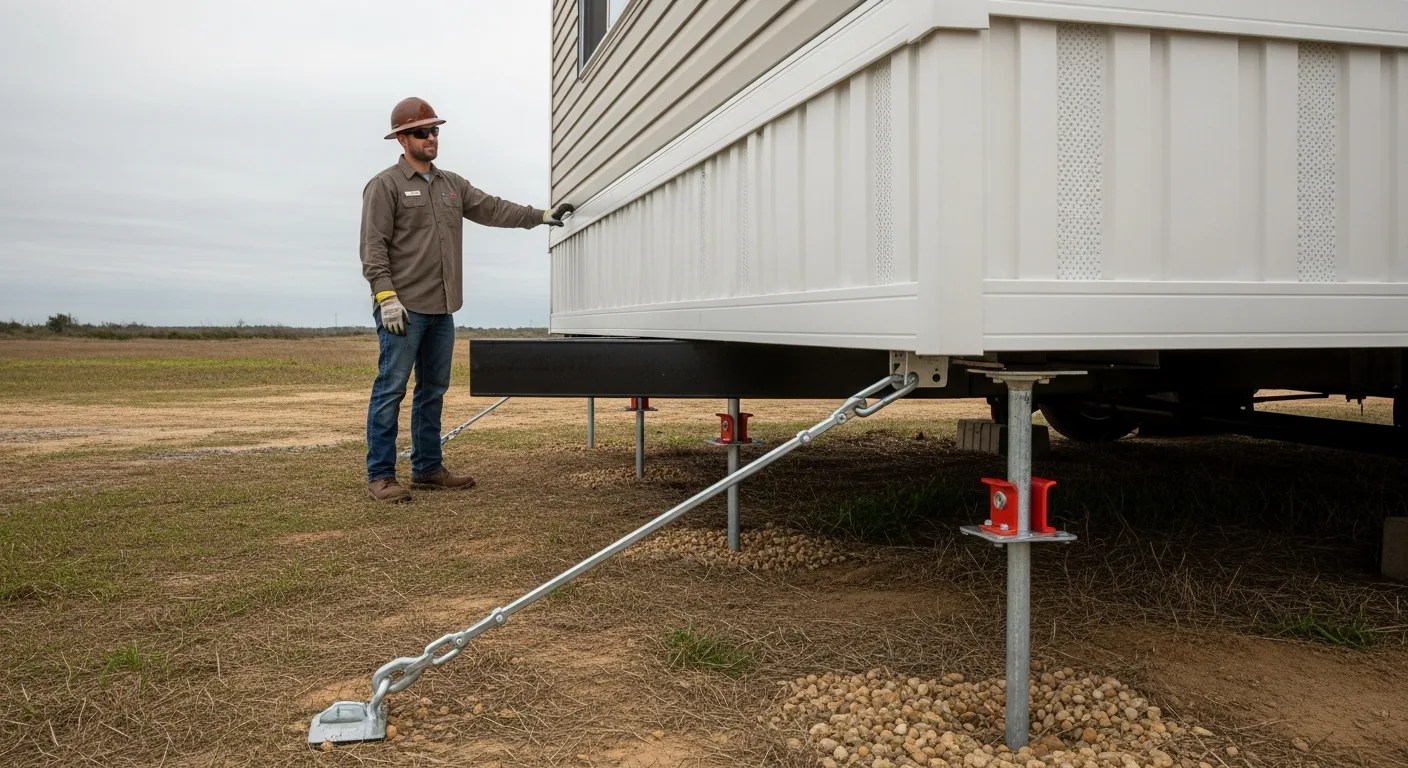
- Anchoring Systems: Use of heavy-duty anchors, such as auger or plate anchors, installed at precise intervals along the home’s perimeter.
- Tie-Downs: Steel straps or cables that secure the home to anchors, with tension adjusted to withstand uplift forces.
- Reinforced Frames: Strengthened chassis and floor systems to distribute wind loads evenly.
- Roof and Wall Connections: Enhanced fasteners and bracing to prevent separation during storms.
- Impact Resistance: Windows and doors rated for high-velocity impacts from debris.
Proper installation is crucial; always hire certified professionals to ensure compliance. For more on exterior protection, explore our home wrap and awning installation guide.
Mobile Home Anchors and Tie Downs: A Detailed Guide
Anchoring is the first line of defense against wind damage in mobile homes. In Wind Zone 3, anchors must be capable of resisting significant uplift forces, often requiring deeper installation and higher-grade materials.
- Types of Anchors: Auger anchors (screw into soil), plate anchors (buried horizontally), and concrete footings (for permanent setups).
- Tie-Down Materials: Galvanized steel straps or cables, with corrosion-resistant coatings for longevity.
- Installation Spacing: Typically, anchors are placed every 10-15 feet along the home’s length, with additional supports at corners.
- Tensioning: Use a torque wrench to ensure proper tension, as per manufacturer specifications.
- Maintenance: Regularly inspect anchors and tie-downs for rust, loosening, or damage, especially after storms.
For homes in high-risk areas, consider adding storm shelters as an extra layer of safety. Learn more about offline security options to complement your safety measures.
Can a Mobile Home Be Tornado Proof?
While no home is entirely tornado-proof, manufactured homes in Wind Zone 3 can be significantly reinforced to withstand tornado-force winds. Key strategies include:
- Structural Upgrades: Adding hurricane straps, reinforced roof trusses, and impact-resistant siding.
- Safe Rooms: Installing FEMA-approved storm shelters or reinforced interior rooms.
- Community Planning: Positioning homes in parks with windbreaks and proper drainage.
It’s important to note that even with upgrades, mobile homes are more vulnerable than site-built structures in extreme tornadoes. Always have an emergency plan and evacuate if advised. For insights into home defense strategies, see our article on secure storage and safety tips.
Storm Shelters for Mobile Homes: Options and Installation
Storm shelters provide a safe haven during tornadoes or hurricanes. For mobile home residents, these can be installed above or below ground, depending on space and soil conditions.
| Type | Pros | Cons | Estimated Cost |
|---|---|---|---|
| Above-Ground Shelter | Easier installation, no flooding risk | Requires space, may be less impact-resistant | $3,000 – $7,000 |
| Below-Ground Shelter | More protection, discreet | Prone to flooding, complex installation | $5,000 – $10,000 |
| Reinforced Room | Integrated into home, convenient | Less effective in direct hits | $2,000 – $5,000 |
When choosing a shelter, ensure it meets FEMA P-320 or ICC-500 standards. Proper installation often requires professional help to anchor the shelter securely. For related home safety topics, refer to our guide on state-specific home defense laws.
Maintenance and Compliance Tips
Regular maintenance is key to ensuring your mobile home remains safe in Wind Zone 3. Follow these steps to stay compliant and prepared:
- Annual Inspections: Check anchors, tie-downs, and structural components for wear or damage.
- Documentation: Keep records of installations, certifications, and repairs for insurance purposes.
- Local Codes: Stay updated on zoning and building code changes in your area.
- Emergency Kit: Prepare a kit with essentials like water, food, and first-aid supplies.
- Insurance Review: Ensure your policy covers wind damage and storm-related losses.
For a comprehensive approach to home upkeep, explore our master maintenance checklists.
Frequently Asked Questions
What wind speed can a Wind Zone 3 mobile home withstand?
Wind Zone 3 manufactured homes are designed to withstand basic wind speeds of up to 110 mph or more, depending on specific HUD certifications and local regulations. However, actual performance can vary based on installation quality and maintenance.
How often should I check my mobile home anchors?
Inspect anchors and tie-downs at least twice a year—before and after storm season—and after any severe weather event. Look for signs of corrosion, loosening, or soil erosion around anchors.
Are storm shelters required for mobile homes in Wind Zone 3?
Storm shelters are not universally required by HUD, but local building codes in high-risk areas may mandate them. Even if not required, they are highly recommended for added safety during tornadoes or hurricanes.
Can I install anchors myself for my mobile home?
While DIY installation is possible, it’s not recommended for Wind Zone 3 due to the critical nature of proper anchoring. Hire a certified professional to ensure compliance with HUD standards and local codes.
What’s the difference between Wind Zone 2 and Wind Zone 3?
Wind Zone 2 covers areas with wind speeds up to 100 mph, while Wind Zone 3 is for speeds over 110 mph. Zone 3 requires more robust anchoring, reinforced structures, and often higher impact resistance.
Do mobile home parks enforce Wind Zone 3 requirements?
Many mobile home parks in high-wind regions enforce HUD standards and may have additional rules for anchoring and safety. Always check with park management before making modifications.
How can I find out my home’s wind zone rating?
Check your home’s data plate, usually located inside a closet or near the electrical panel, or consult local building authorities. You can also use online tools from FEMA or HUD to map wind zones.
Frequently Asked Questions
What wind speed can a Wind Zone 3 mobile home withstand?
Wind Zone 3 manufactured homes are designed to withstand basic wind speeds of up to 110 mph or more, depending on specific HUD certifications and local regulations. However, actual performance can vary based on installation quality and maintenance.
How often should I check my mobile home anchors?
Inspect anchors and tie-downs at least twice a year—before and after storm season—and after any severe weather event. Look for signs of corrosion, loosening, or soil erosion around anchors.
Are storm shelters required for mobile homes in Wind Zone 3?
Storm shelters are not universally required by HUD, but local building codes in high-risk areas may mandate them. Even if not required, they are highly recommended for added safety during tornadoes or hurricanes.
Can I install anchors myself for my mobile home?
While DIY installation is possible, it’s not recommended for Wind Zone 3 due to the critical nature of proper anchoring. Hire a certified professional to ensure compliance with HUD standards and local codes.
What's the difference between Wind Zone 2 and Wind Zone 3?
Wind Zone 2 covers areas with wind speeds up to 100 mph, while Wind Zone 3 is for speeds over 110 mph. Zone 3 requires more robust anchoring, reinforced structures, and often higher impact resistance.
Do mobile home parks enforce Wind Zone 3 requirements?
Many mobile home parks in high-wind regions enforce HUD standards and may have additional rules for anchoring and safety. Always check with park management before making modifications.
How can I find out my home's wind zone rating?
Check your home’s data plate, usually located inside a closet or near the electrical panel, or consult local building authorities. You can also use online tools from FEMA or HUD to map wind zones.