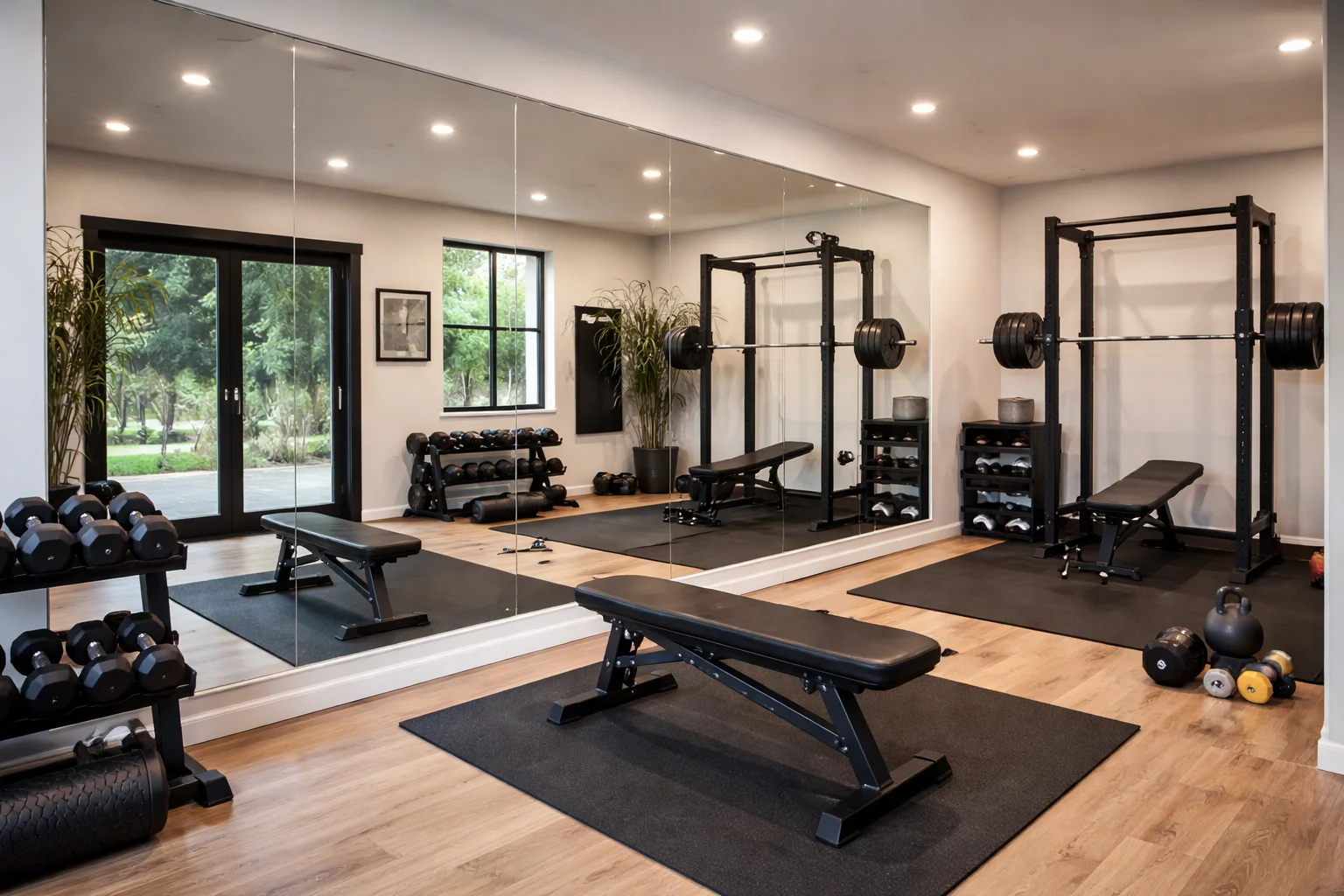
Designing a home gym is an exciting project that blends fitness goals with personal style. Whether you’re converting a spare room, garage, or basement, the right design choices can transform your space into a motivating and efficient workout zone. Key elements like mirrors, storage, and layout play crucial roles in functionality, safety, and aesthetics. In this guide, we’ll explore how to select the best home gym mirrors, optimize storage for equipment, and plan layouts that maximize your space. By focusing on these aspects, you can create a gym that not only meets your fitness needs but also enhances your overall home environment. For more on integrating smart features into your home, check out our smart home setup guide.
Choose home gym mirrors for safety and form checks, opt for storage that keeps equipment organized and accessible, and design layouts that allow free movement and efficient use of space.
Why Home Gym Mirrors Are Essential
Home gym mirrors are more than just decorative; they serve practical purposes that enhance your workout experience. Properly placed mirrors help you monitor your form during exercises, reducing the risk of injury and improving technique. They also create an illusion of more space, making smaller areas feel larger and brighter by reflecting light. When selecting mirrors, consider factors like size, placement, and safety features to ensure they complement your gym’s design. For instance, wall-mounted mirrors are ideal for stability, while floor-to-ceiling options can maximize visibility. Integrating mirrors thoughtfully can elevate both the functionality and appeal of your home gym, much like how exterior elements impact a mobile home’s look and durability, as discussed in our guide on mobile home exteriors.
- Monitor form and prevent injuries
- Enhance space perception and lighting
- Choose between wall-mounted or freestanding options
- Prioritize safety with tempered glass
Selecting the Right Home Gym Storage Solutions
Effective home gym storage is key to maintaining a clutter-free and safe environment. Without proper storage, equipment like dumbbells, resistance bands, and yoga mats can create tripping hazards and reduce usable space. Start by assessing your storage needs based on the types of equipment you own and the available area. Options range from wall racks and shelving units to multi-functional furniture that doubles as storage. For example, a bench with built-in compartments can save floor space while keeping weights handy. Organizing your gear not only improves safety but also makes workouts more efficient by reducing setup time. Consider storage solutions that align with your gym’s layout to ensure everything has its place.
- Assess equipment types and quantities
- Use wall-mounted racks for heavy items
- Incorporate multi-functional furniture
- Label storage for easy access
Planning Your Home Gym Layout
A well-thought-out home gym layout maximizes functionality and flow, allowing you to move freely between exercises. Begin by measuring your space and sketching a floor plan that accounts for key zones, such as cardio, strength training, and stretching areas. Ensure there’s enough clearance around equipment to prevent accidents, especially with moving parts like treadmills or weight benches. Consider the placement of mirrors and storage in relation to these zones to enhance usability. For smaller spaces, vertical storage and foldable equipment can help optimize layout. By planning ahead, you can create a gym that supports varied workouts without feeling cramped, similar to how smart home devices integrate seamlessly, as highlighted in our smart home integration guide.
- Measure space and create a floor plan
- Designate zones for different activities
- Allow adequate clearance around equipment
- Use vertical space for storage
Comparing Mirror Types for Home Gyms
When choosing home gym mirrors, it’s helpful to compare different types to find the best fit for your needs. Factors like material, size, and installation method can impact durability, safety, and cost. Below is a table summarizing common mirror options to guide your decision.
| Mirror Type | Pros | Cons | Best For |
|---|---|---|---|
| Tempered Glass | High safety, shatter-resistant | Higher cost | Families or high-traffic areas |
| Acrylic | Lightweight, affordable | Prone to scratches | Budget-friendly setups |
| Wall-Mounted | Stable, space-saving | Requires installation | Permanent gym spaces |
| Freestanding | Portable, easy to move | Less stable | Multi-use rooms |
Tips for Integrating Mirrors and Storage
Integrating mirrors and storage into your home gym design requires careful planning to balance aesthetics and practicality. Place mirrors on walls opposite windows or light sources to amplify natural light and make the space feel airier. Combine them with storage units like shelves or racks that don’t obstruct reflective surfaces, ensuring you can still check your form. For example, install mirrors above a storage bench or alongside wall-mounted pegboards. This approach not only saves space but also creates a cohesive look. Remember, a well-integrated design enhances both the visual appeal and functionality of your gym, much like how exterior features protect and beautify a home, as seen in resources on mobile home exteriors.
- Position mirrors to reflect light
- Combine mirrors with non-obstructive storage
- Use multi-purpose fixtures
- Ensure easy access to stored items
FAQs About Home Gym Design
What size mirrors are best for a home gym?
Choose mirrors that cover a significant portion of the wall, such as floor-to-ceiling or large panels, to provide full-body visibility during workouts. For smaller spaces, a mirror that’s at least 4 feet wide and 6 feet tall can be effective.
How can I save space with home gym storage?
Opt for vertical storage solutions like wall racks, overhead shelves, or pegboards. Foldable equipment and multi-functional items, such as benches with storage, also help maximize limited space.
Are acrylic mirrors safe for home gyms?
Acrylic mirrors are generally safe as they are shatter-resistant, but they can scratch easily. For high-impact areas, tempered glass mirrors are a more durable choice.
What layout works for a small home gym?
In small spaces, use a compact layout with foldable equipment, wall-mounted storage, and mirrors placed to create depth. Designate multi-use zones to accommodate different exercises without clutter.
How do I secure mirrors in my home gym?
Use proper mounting hardware, such as brackets or adhesive strips designed for heavy mirrors. For added safety, consider professional installation, especially for large or tempered glass mirrors.
Can I use smart devices in my home gym?
Yes, integrating smart devices like fitness trackers, smart lights, or audio systems can enhance your workout experience. Learn more in our smart home setup guide.
What storage is best for heavy weights?
Wall-mounted weight racks or sturdy shelving units are ideal for heavy weights, as they keep items off the floor and organized. Ensure the storage is rated for the weight load to prevent accidents.
How often should I clean home gym mirrors?
Clean mirrors weekly with a soft cloth and non-abrasive cleaner to maintain clarity and prevent smudges. Avoid harsh chemicals that could damage the surface.