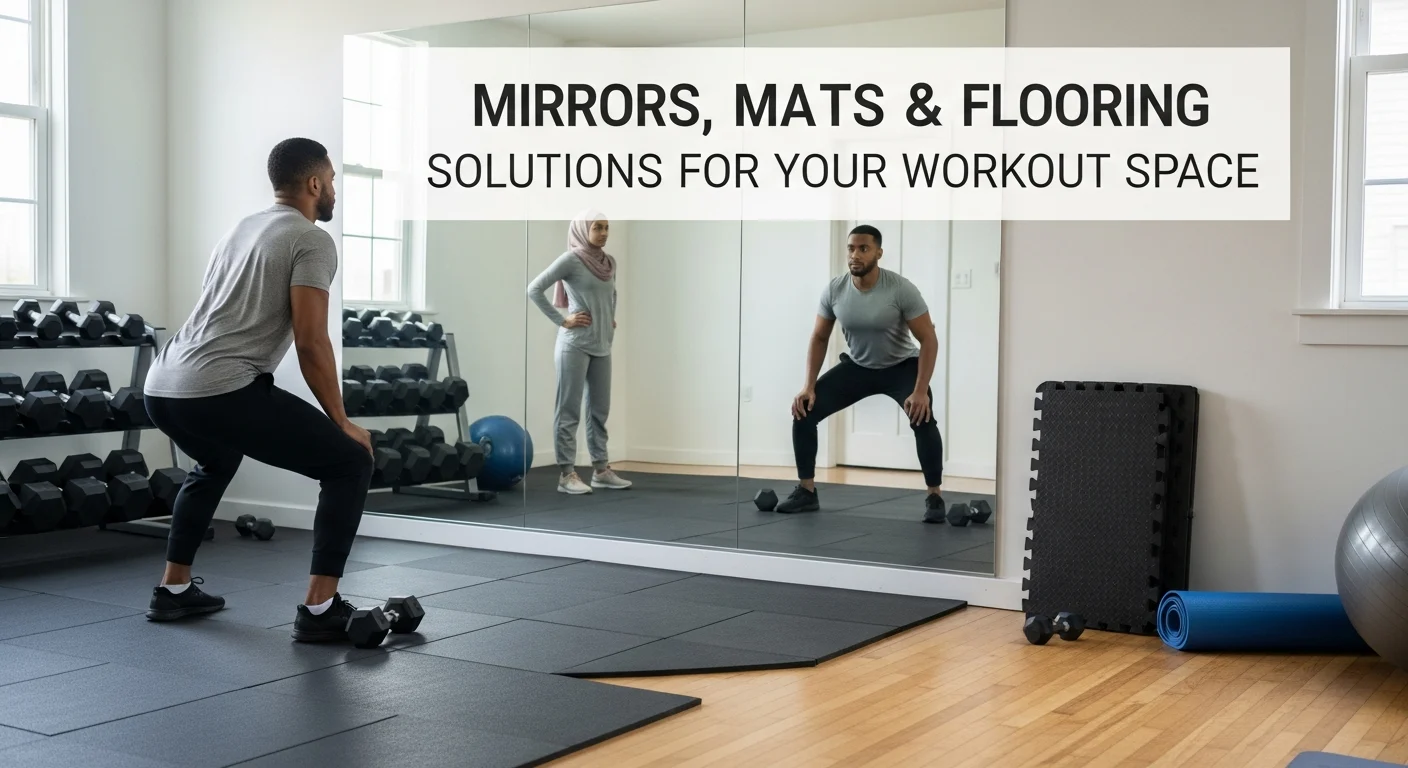
Creating a home gym is an exciting project that can transform your fitness routine, offering convenience and customization right at your fingertips. Whether you’re lifting weights, practicing yoga, or doing high-intensity interval training, the right setup is crucial for safety, motivation, and performance. In this guide, we’ll dive into the essentials of home gym design, focusing on key elements like gym mirrors at home, tumbling mats for home, and home workout room flooring. We’ll also explore how proper home gym lighting can enhance your experience, ensuring your space is both functional and inspiring. From selecting durable mats to installing mirrors that boost form and confidence, you’ll learn how to build a gym that meets your needs and fits your lifestyle.
To set up a home gym effectively, start by choosing durable flooring like rubber or foam mats for safety and noise reduction, install large gym mirrors at home to monitor form and create space, add tumbling mats for home for cushioning during exercises, and optimize home gym lighting with bright, adjustable fixtures to reduce eye strain and boost energy.
Why Gym Mirrors at Home Are Essential for Your Workout
Gym mirrors at home are more than just decorative; they play a vital role in improving your fitness routine. By allowing you to see your form in real-time, mirrors help prevent injuries and ensure you’re performing exercises correctly. They also create an illusion of a larger space, making even small rooms feel more open and inviting. When selecting mirrors, consider size, placement, and safety features to maximize their benefits.
- Monitor your posture and alignment during lifts or stretches.
- Boost motivation by visually tracking your progress over time.
- Enhance natural light reflection to brighten the room.
- Choose shatterproof or tempered glass for added safety, especially in high-activity areas.
For more tips on optimizing your gym layout, check out our guide on home gym design, which covers mirrors, storage, and efficient setups.
Choosing the Right Tumbling Mats for Home Use
Tumbling mats for home provide essential cushioning and protection, making them ideal for activities like yoga, gymnastics, or high-impact workouts. They come in various materials and thicknesses, so it’s important to select ones that match your exercise needs. A good mat should offer durability, comfort, and easy maintenance to withstand regular use.
- Assess your primary activities: thicker mats for tumbling, thinner ones for yoga.
- Look for non-slip surfaces to prevent accidents during dynamic movements.
- Consider foldable or interlocking mats for easy storage and customization.
- Check for waterproof or easy-clean materials to handle sweat and spills.
If you’re dealing with pet-related issues in your home gym, our article on pet skin solutions offers advice on maintaining a clean and healthy environment.
Home Workout Room Flooring Options Compared
Selecting the right home workout room flooring is critical for safety, noise reduction, and equipment protection. Different materials offer varying levels of cushioning, durability, and cost, so it’s essential to weigh your options based on your workout intensity and budget. Below is a comparison of popular flooring types to help you decide.
| Flooring Type | Best For | Pros | Cons |
|---|---|---|---|
| Rubber Mats | Weightlifting, HIIT | Durable, shock-absorbent, easy to clean | Can be heavy, higher cost |
| Foam Tiles | Yoga, Pilates | Lightweight, cushioned, affordable | Less durable, may tear over time |
| Vinyl Planks | Cardio, general fitness | Water-resistant, stylish, easy install | Less cushioning, can be slippery |
| Carpet | Low-impact exercises | Soft, quiet, budget-friendly | Hard to clean, stains easily |
For broader home improvement projects, such as upgrading your space, explore our insights on whole home upgrades that include rewiring and dehumidification.
Optimizing Home Gym Lighting for Better Workouts
Home gym lighting is often overlooked, but it significantly impacts your energy levels and safety. Proper lighting reduces eye strain, prevents shadows that could lead to accidents, and creates an inviting atmosphere. Aim for a mix of natural and artificial light, with adjustable options to suit different times of day or workout intensities.
- Use LED bulbs for bright, energy-efficient illumination that mimics daylight.
- Install dimmer switches to adjust brightness for calming yoga sessions or intense cardio.
- Place lights strategically to avoid glare on mirrors or equipment.
- Consider adding task lighting for specific areas like weight racks or stretching zones.
If you’re enhancing other areas of your home, our guide on masculine home office ideas offers tips for creating professional and well-lit spaces.
Essential Accessories to Complete Your Home Gym
Beyond mirrors, mats, and flooring, a few key accessories can elevate your home gym experience. From storage solutions to ventilation, these additions ensure your space is organized, comfortable, and ready for any workout. Prioritize items that align with your fitness goals and available space.
- Storage racks or shelves to keep weights and gear tidy and accessible.
- Fans or air purifiers to maintain airflow and reduce odors.
- Bluetooth speakers or sound systems for motivational music or guided workouts.
- Timer or clock to track intervals and rest periods efficiently.
For those interested in advanced home setups, learn about home bowling alley and cinema ideas for ultimate entertainment spaces.
Frequently Asked Questions
How do I choose the best gym mirror at home?
Select a gym mirror at home based on size, safety, and placement. Opt for large, wall-mounted mirrors that cover a significant area to monitor form, and choose tempered or shatterproof glass to prevent injuries. Position them where they reflect natural light and don’t create distractions.
What are the benefits of tumbling mats for home workouts?
Tumbling mats for home provide cushioning to protect joints during high-impact exercises, reduce noise from equipment, and offer a non-slip surface for safety. They’re versatile for activities like yoga, gymnastics, or strength training, and easy to store when not in use.
Which flooring is best for a home workout room?
The best home workout room flooring depends on your activities: rubber mats for heavy lifting, foam tiles for low-impact exercises, or vinyl for cardio. Consider durability, comfort, and maintenance to match your routine and budget.
How can I improve home gym lighting?
Improve home gym lighting by using bright LED bulbs, adding dimmer controls, and incorporating natural light sources. Ensure even distribution to avoid shadows and glare, which can enhance safety and motivation during workouts.
Are home gyms worth the investment?
Yes, home gyms are worth the investment for convenience, cost savings on gym memberships over time, and personalized setups. They allow flexible scheduling and can boost consistency in your fitness routine.
How do I maintain my home gym equipment?
Maintain home gym equipment by regularly cleaning mats and flooring with mild cleaners, checking mirrors for cracks, and lubricating moving parts. Store items properly to extend their lifespan and ensure safety.
Can I set up a home gym in a small space?
Absolutely! Use foldable mats, wall-mounted mirrors, and multi-functional equipment to maximize small spaces. Prioritize essentials like flooring and lighting to create an efficient and inviting workout area.
Frequently Asked Questions
How do I choose the best gym mirror at home?
Select a gym mirror at home based on size, safety, and placement. Opt for large, wall-mounted mirrors that cover a significant area to monitor form, and choose tempered or shatterproof glass to prevent injuries. Position them where they reflect natural light and don’t create distractions.
What are the benefits of tumbling mats for home workouts?
Tumbling mats for home provide cushioning to protect joints during high-impact exercises, reduce noise from equipment, and offer a non-slip surface for safety. They’re versatile for activities like yoga, gymnastics, or strength training, and easy to store when not in use.
Which flooring is best for a home workout room?
The best home workout room flooring depends on your activities: rubber mats for heavy lifting, foam tiles for low-impact exercises, or vinyl for cardio. Consider durability, comfort, and maintenance to match your routine and budget.
How can I improve home gym lighting?
Improve home gym lighting by using bright LED bulbs, adding dimmer controls, and incorporating natural light sources. Ensure even distribution to avoid shadows and glare, which can enhance safety and motivation during workouts.
Are home gyms worth the investment?
Yes, home gyms are worth the investment for convenience, cost savings on gym memberships over time, and personalized setups. They allow flexible scheduling and can boost consistency in your fitness routine.
How do I maintain my home gym equipment?
Maintain home gym equipment by regularly cleaning mats and flooring with mild cleaners, checking mirrors for cracks, and lubricating moving parts. Store items properly to extend their lifespan and ensure safety.
Can I set up a home gym in a small space?
Absolutely! Use foldable mats, wall-mounted mirrors, and multi-functional equipment to maximize small spaces. Prioritize essentials like flooring and lighting to create an efficient and inviting workout area.